Empathy and Neurodiversity: A Competitive Edge for Business

Empathy and Neurodiversity: A Competitive Edge for Business

Empathy and Neurodiversity: A Competitive Edge for Business

Business Innovation Brief Best Article

In the business world, we often talk about innovation, agility, and productivity as cornerstones of success. Yet, we seldom give enough weight to one of the most transformative forces in the workplace: empathy. As I reflect on the recent Bliss Business Podcast episode featuring Gloria Folaron of Leantime, it’s clear that we are on the verge of a business revolution where empathy, paired with an understanding of neurodiversity, will be the key to unlocking future potential.

Gloria’s journey from an ER nurse to a startup leader gave her a profound perspective on this. While many in business take a linear, purely performance-driven approach, Gloria sees the human element as critical to the success of any team. Her emphasis on “cognitive accessibility” is an important concept for business leaders to grasp. Cognitive accessibility isn’t just a buzzword; it’s a recognition that we all process information differently, and tools and systems should be designed to support that diversity.

The Power of Neurodiverse Teams

One of the most eye-opening moments in the podcast was the revelation that over 53% of individuals in the tech industry identify as neurodivergent, but most companies believe that only 3% of their workforce is. The disconnect here is staggering and reflects the hidden potential within teams that goes untapped due to a lack of understanding or safe spaces for disclosure.

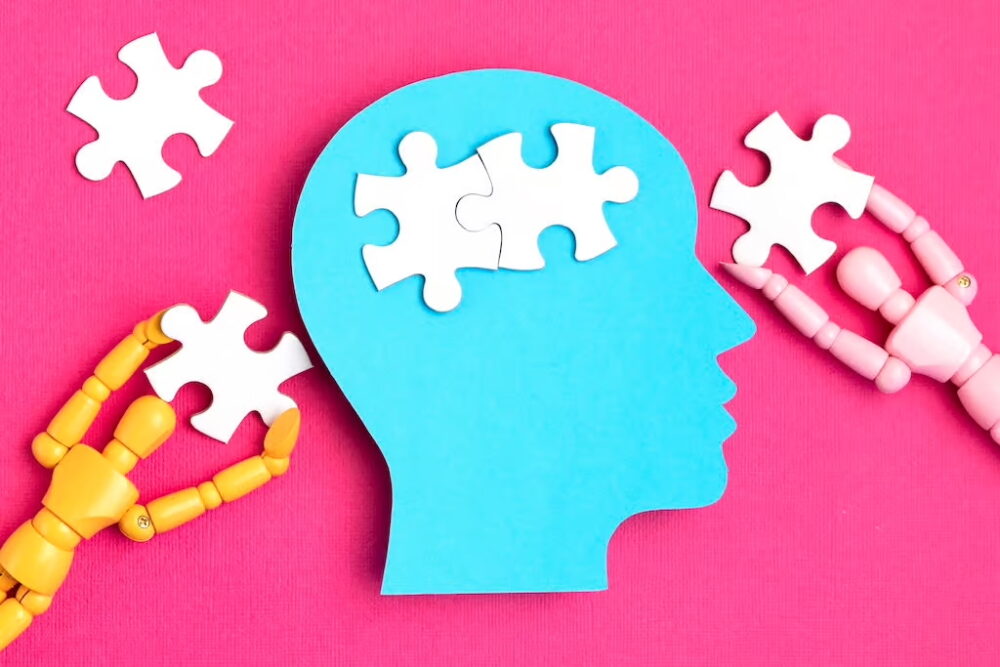
Neurodiversity in the workplace is not about accommodating deficits — it’s about leveraging different kinds of strengths. For instance, those with ADHD often bring creativity, rapid problem-solving, and the ability to synthesize information quickly. This diversity of thought is a strategic advantage. Companies that embrace these varied cognitive approaches are far more likely to outperform their competitors, particularly in industries that thrive on innovation.

Empathy: More than a Soft Skill

But what does this have to do with empathy? Everything.

Empathy is the bridge that allows team members to understand each other’s unique challenges and strengths. It fosters an environment where neurodiverse individuals can thrive. Without empathy, even the most well-intentioned diversity initiatives will fall flat. Gloria’s approach of embedding empathy into project management — through tools that are not only functional but also adaptable to different cognitive styles — highlights that the success of a project is often less about hitting deadlines and more about the relationships within the team.

The traditional view of business productivity has been that efficiency and results come from a streamlined, one-size-fits-all approach. But studies and real-world examples are showing us that this mindset limits potential. When teams are given the space to work in ways that align with their cognitive strengths, their engagement and productivity skyrocket.

The Business Case for Empathy

For those still focused purely on the bottom line, consider this: Teams that include neurodiverse professionals are 30% more productive than those without them, according to Deloitte. The same study shows that companies that foster empathetic environments see lower turnover, increased innovation, and greater team cohesion. This is not just a moral or ethical stance — though it should be that too — it’s a business strategy that drives real, measurable results.

The path forward is clear. Companies that invest in creating empathetic, neurodiverse work environments will outlast those that cling to rigid, outdated structures.

The Future is Human

As Gloria mentioned, love and empathy are not just emotional niceties that we can afford to ignore in business — they are critical drivers of long-term success. Those companies that choose to prioritize human connection and neurodiversity will be the ones that not only survive but thrive in the coming decade. In fact, I would argue that this shift represents the next phase of business evolution: one where we no longer view empathy as a soft skill but as the competitive advantage it truly is.

In the words of Gloria Folaron, “For the companies that do capture that [empathy], they’re going to be the companies who end up succeeding.” The future is human, and the businesses that understand and embrace this will be the ones leading the way.

Conclusion

This perspective is not just about theory but about a vision for what the future of work can be. It’s time to let go of antiquated beliefs about productivity and embrace a more holistic, human-centric approach. The data, the experience, and the results all point to the same conclusion: empathy and neurodiversity are the keys to a truly successful and sustainable business future.

Check out the conversation with Gloria Folaron on The Bliss Business Podcast


Originally Featured on The Bliss Business Podcast Blog

Business Innovation Brief
Blog Subscrition Here
Loading

Becoming a Category Architect: The New Era of CMO Leadership in the Age of AI

Becoming a Category Architect: The New Era of CMO Leadership in the Age of AI

Becoming a Category Architect: The New Era of CMO Leadership in the Age of AI

AI is reshaping the modern enterprise at breakneck speed. And nowhere is that transformation more visible — or more misunderstood — than in the role of the Chief Marketing Officer.

This isn’t just about generating leads or running campaigns anymore. Today’s most impactful CMOs are stepping into something bigger: they’re becoming category architects.

They don’t just position products — they design the playing field. They don’t just follow market demand — they shape it. And in doing so, they elevate marketing from a function to a force.

Whether you’re leading a high-growth SaaS venture, launching an AI-native platform, or modernizing a legacy brand, the new CMO mandate is clear:

Create meaning. Build trust. Shape culture.

From Campaigns to Cultural Gravity

A few years ago, I was running a paid media strategy for a fast-scaling platform. We poured six figures into acquisition, and it worked — kind of. Then we did something simple: one of our founders got interviewed on a niche podcast. That single episode brought in more qualified leads than the entire campaign. And more importantly, it made people feel like they knew us.

That’s when it clicked: trust beats traffic.

We’ve officially entered the era of cultural gravity. It’s not just about visibility anymore — it’s about magnetism. The brands that win today aren’t louder. They’re more meaningful. They earn their place in the conversation.

That’s where earned media takes center stage.

Because category architects don’t chase attention — they earn it:

  • They publish bylined pieces in Harvard Business Review, TechCrunch, or Fast Company — not for PR, but to define the narrative.
  • They put their leaders on podcasts that speak directly to their ICPs — not just big platforms, but relevant ones.
  • They show up at the right industry events — not just to speak, but to shape the agenda.
  • They collaborate with trusted influencers — not for followers, but for shared belief.

These aren’t tactics. They’re trust signals. And trust is the new growth engine.

In fact, 70% of consumers say they trust earned media over paid ads.
 (Source: Nielsen)

Intention-Based Design: The Soul of Modern Marketing

At the heart of everything I do — whether in building brand systems or designing leadership cultures — is a belief I call Intention-Based Design.

It’s simple but powerful: Every campaign, every message, every decision should start with a clear, human-centered intention. AI makes it easier than ever to generate content, automate outreach, and scale messaging. But scale without soul? That’s just noise.

What separates the good from the great is purpose.

  • Why are we showing up?
  • What transformation are we inviting?
  • How does our message connect emotionally, ethically, and experientially?

When marketing is rooted in intention, it becomes:

  • Empathetic by design
  • Relevant by default
  • Memorable by experience

This is how the most trusted brands are built — from the inside out.

Build the Market, Don’t Just Chase It

Here’s the difference: Marketers chase demand. Category architects create it.

They don’t just ride waves — they build them. They define a movement and invite others to join it. How?

  • They start with a Category Manifesto — a bold, intentional declaration of what’s broken, what’s needed, and what’s possible.
  • They build live content platforms — podcasts, events, roundtables — designed not to pitch, but to listen and lead.
  • They form Category Councils made up of customers, partners, and subject-matter experts to legitimize and grow the space.
  • They seed conversations across digital tribes, not with ads, but with ideas.

This is how you build cultural and market momentum. It’s how you earn permission to lead. And when you do, marketing doesn’t just support sales — it pulls the whole organization forward.

The CMO as Cultural Architect

To truly lead in this era, CMOs must evolve from being functional executives to becoming cultural architects. That means:

  • Designing internal narratives that align product, marketing, sales, and customer success around a shared belief system
  • Helping talent feel purpose-driven, not just performance-driven
  • Creating experiences that unify brand, product, and community in a way that feels seamless and human

Because the strongest brands today aren’t just remembered for what they sell — they’re remembered for what they stand for.

Studies show that purpose-led companies outperform the market by 42%.
 (Source: Harvard Business School)

Final Thought

We’re no longer just marketers — we’re strategic storytellers, design thinkers, and intention-shapers.

We architect movements.
 We build trust at scale.
 We lead culture, not just campaigns.

And in this new age, to market well is to lead well.

If you’re in the process of creating — or redefining — a category, let’s connect. I’ve helped organizations move from noise to narrative, and I’d be glad to explore how we can do that for yours.

Let’s architect what’s next.

Business Innovation Brief
Blog Subscrition Here
Loading

Empathy Under Pressure: How Empathetic Leadership Navigates Crisis with Clarity and Strength

Empathy Under Pressure: How Empathetic Leadership Navigates Crisis with Clarity and Strength

Empathy Under Pressure: How Empathetic Leadership Navigates Crisis with Clarity and Strength

Business Innovation Brief Best Article

In times of crisis — whether economic, reputational, or operational — leadership is tested not by how quickly you react, but by how deeply you connect. The instinct to control, to “fix,” to revert to command-and-control thinking is strong under pressure. But the leaders who stand out aren’t the loudest or most reactive — they’re the ones who listen first, act with purpose, and keep their people anchored in trust.

“Empathetic leadership isn’t a luxury for calm times; it’s the backbone of resilience.”

I’ve seen this firsthand, both in my own leadership journey and in the organizations I’ve helped transform. Crises reveal the gaps in culture, communication, and cohesion. But empathy — real empathy — can close those gaps faster than any tactical playbook ever could.

Here’s how empathetic leadership shows up when it matters most:

Pause to Understand, Not Just React

Empathetic leaders slow the moment down. They create space for understanding before jumping into solution mode. That doesn’t mean inaction — it means intentional action. They ask: What are people experiencing? What’s the emotional temperature of the room? What are we not seeing?

It’s this pause that prevents avoidable mistakes, restores trust, and leads to solutions that stick.

Imagine a mid-sized tech company facing a product recall due to a software flaw. The instinct from leadership might be to fire off a PR statement, discipline the QA team, and rush a fix. But an empathetic leader gathers the impacted team first, asks them what went wrong, how they’re doing, and what support they need to respond thoughtfully. That brief pause creates alignment — and ultimately, a faster, better response.

Communicate with Transparency and Care

In crisis, silence is rarely neutral — it breeds fear. But generic, robotic updates don’t help either. Empathetic leaders communicate often, clearly, and with emotional resonance. They share what they know, what they don’t, and what they’re doing to bridge the gap. And they do it in a way that says, I see you. We’re in this together.

Crisis communication should feel more like a dialogue than a press release. Leaders who are transparent — not just with facts, but with emotion — build credibility when it matters most.

Picture a hospitality group suddenly hit by pandemic-related closures. The CEO hosts weekly town halls with staff, acknowledging uncertainty, answering tough questions, and being honest about financial realities. Employees — even those furloughed — feel respected, included, and hopeful. That’s the power of care paired with candor.

Empower Others to Rise

In high-stress moments, it’s tempting for leaders to take on everything themselves. But that’s a fast track to burnout — and disempowerment. The best leaders extend trust even during chaos. They invite others into the problem-solving process. They lean on shared intelligence. That’s not weakness. That’s wisdom.

Empowering others in a crisis multiplies your leadership. It gives people agency when they feel helpless, and it reveals hidden strengths you might have otherwise missed.

Take a marketing agency that loses a major client overnight. Instead of rallying only the executive team, the founder invites junior staff to brainstorming sessions. A 26-year-old strategist proposes a pivot to niche video campaigns — and it works. The agency survives, and the team grows stronger and more committed because they were part of the solution.

Balance Compassion with Clarity

Empathy doesn’t mean being soft. It means being human. Leaders who navigate crises with empathy don’t avoid hard conversations — they deliver them with dignity. They hold space for people’s emotions while remaining clear about what must happen next. Compassion and accountability are not at odds — they’re partners.

The most effective crisis leaders don’t sugarcoat reality. But they also don’t weaponize it. They speak truthfully, while reminding people that their value isn’t tied to the chaos around them.

Consider a founder who has to lay off 15% of their workforce. Instead of outsourcing it to HR, they personally meet with every impacted employee, explain the reasoning with empathy, and offer real support: references, severance, even job leads. The remaining team doesn’t fear they’re next — they respect that they’re part of a company that values people.

Turn the Crisis into Culture-Building

Every crisis is a cultural fork in the road. You can emerge fractured — or forged. Empathetic leaders use the experience to reinforce purpose, clarify values, and strengthen relationships. When people feel seen and supported during the worst moments, they become more committed in the best ones.

This is where purpose-driven cultures are either revealed or rebuilt. Crisis can crystallize what really matters — if you let it.

Imagine a SaaS startup that missed funding targets and had to downsize. Instead of retreating, the team holds a retrospective — not just on the numbers, but on how people felt, what they learned, and how they’ll support each other moving forward. They emerge with tighter bonds, clearer purpose, and a culture more resilient than before.

Final Thought

Crises don’t break organizations. They reveal them. And what gets revealed in an empathetically led organization is something powerful: character, commitment, and cohesion.

“Empathy under pressure isn’t just good leadership — it’s crisis leadership evolved.”

Let me know what resonates most with you. I’d love to hear how empathy has changed the way you or your team has navigated high-pressure situations.

Business Innovation Brief
Blog Subscrition Here
Loading

From Spotting to Solving to Owning: The Evolution of Impactful Leadership

From Spotting to Solving to Owning: The Evolution of Impactful Leadership

From Spotting to Solving to Owning: The Evolution of Impactful Leadership

Business Innovation Brief Best Article

In every organization, there’s a spectrum of how people engage with problems. Some point them out. Others analyze and propose solutions. And then there are the few who roll up their sleeves, take full responsibility, and drive change to the finish line.

These aren’t just behaviors — they’re levels of leadership maturity and impact. Welcome to the evolution: Problem Spotter → Problem Solver → Problem Owner.

The Problem Spotter

Everyone knows a problem spotter. They’re often the first to identify what’s broken, inefficient, or misaligned. They highlight risks early and ask the hard questions. But here’s the catch: spotting a problem without taking any steps toward resolution doesn’t move the organization forward — it just creates noise.

Spotters bring awareness, but not progress.

Too often, spotters stop at critique. They get stuck in loops of complaint or apathy, especially when they don’t feel empowered to offer solutions. But power isn’t given — it’s practiced.

Want to grow beyond this stage? Ask:

  • What could be done here?
  • How would I approach this if I had to fix it?

Even proposing small fixes trains your brain to shift from criticism to constructive thinking.

The Problem Solver

Solvers go one level deeper. They bring frameworks, suggestions, and strategies. They are critical thinkers who imagine what could be and articulate it clearly.

Solvers are incredibly valuable — but only if their ideas don’t stay theoretical.

Without follow-through, a brilliant solution is just intellectual decoration. Organizations are full of “PowerPoint geniuses” whose slide decks look great but never make it to execution. And while they may earn some recognition, their value has a ceiling.

To evolve, solvers must embrace ownership. Ask:

  • Can I lead this initiative to completion?
  • What would it take to execute this, not just ideate it?

The Problem Owner

Problem owners are rare. They not only identify and solve the problem — they own the outcome.

They take responsibility. They pull in the right people. They deal with the messiness. They make things happen.

Problem owners are the engine behind real change. And in nearly every organization, owners are the ones who get promoted, trusted, and remembered. Not because they talk a big game, but because they play it and win.

They know that leadership isn’t a job title — it’s the act of turning insight into impact.

The Promotion Curve

While each role adds value in its own way, the level of impact — and likelihood of advancement — varies greatly:

  • Problem Spotters (~50%)
     Common but often stuck. Without shifting into solution mode, their insights rarely lead to change — or recognition.
  • Problem Solvers (~35%)
     Valued for their thinking and ideas, but without action, their impact plateaus. Solvers are often trusted advisors, but not always seen as leaders.
  • Problem Owners (~15%)
     Rare and indispensable. These individuals turn problems into progress and are the ones most often promoted, trusted, and asked to lead.

The path is clear: the more ownership you take, the more influence — and opportunity — you create.

The Path Forward

If you’re a Spotter:

  • Don’t just raise issues — bring ideas. Even imperfect ones.
  • Be the person who comes to the table with, “Here’s what I noticed, and here’s one way we might approach it.”

If you’re a Solver:

  • Volunteer to lead a small pilot.
  • Build muscle memory around execution — timelines, resource wrangling, iteration.
  • Learn to navigate the human element: alignment, resistance, communication.

If you’re an Owner:

  • Teach others how to take ownership.
  • Build teams that operate with the same sense of purpose and accountability.
  • Scale your impact by enabling more problem owners.

In Self-Managed Teams, Ownership is the Currency

In traditional organizations, structure can compensate for a lack of ownership — managers chase deadlines, assign tasks, and enforce accountability. But in a self-managed organization, the model only thrives when people operate like owners.

There’s no hierarchy to push things forward — just individuals who choose to.

That’s why identifying whether someone is a spotter, solver, or owner is critical in a self-managed culture. The success of the team depends on individuals stepping up, not waiting to be told.

Leaders (formal or informal) must:

  • Encourage self-awareness and honest reflection
  • Create safe space for people to take initiative
  • Coach teammates on how to evolve from spotting to solving to owning

Because when everyone operates like a problem owner, you don’t need layers of oversight — you have momentum, trust, and shared accountability.

That’s the power of ownership in action.

Final Thoughts

Ask yourself:

  • Which one am I today?
  • Which one do I want to be?
  • What’s the next step in my evolution?

Spotting and solving problems are valuable skills — but ownership is a mindset that transforms you from a thinker into a leader.

The world doesn’t need more critics.
 It doesn’t need more theorists.
 It needs more doers with ownership.

Because real change doesn’t happen when someone points out the problem — it happens when someone takes it personally and gets it done.

Business Innovation Brief
Blog Subscrition Here
Loading

Intention-Based Design: The Next Evolution of Design Thinking

Intention-Based Design: The Next Evolution of Design Thinking

Intention-Based Design: The Next Evolution of Design Thinking

After more than four years evangelizing Design Thinking — and serving as an advisor to the University of California’s Design Thinking Program — I’ve seen firsthand how transformative this framework can be. At its core, Design Thinking taught us to empathize deeply, to define real human problems, to ideate with curiosity, prototype boldly, and test with humility.

It was a human-centered revolution. It reminded us that people — not processes or profit margins — should be at the center of innovation.

But as the world changes, so must our frameworks.

We are entering a new era. One where the next evolution of innovation isn’t just about building better products — it’s about aligning with deeper human purpose. I believe we’re witnessing the rise of something I call Intention-Based Design.

“As AI and technology accelerate, it’s time to expand the Design Thinking mindset — toward purpose, alignment, and intention.”

From Empathy to Intention

To understand why Intention-Based Design is emerging now, we must revisit the foundation of Design Thinking.

Design Thinking asks: What do people need?
 Intention-Based Design asks: What deeper purpose does this fulfill?

If empathy is about walking in someone’s shoes, intention is about aligning with where they’re going — and why. It requires a shift from simply understanding user behavior to honoring human intent.

While empathy centers on feeling what others feel, intention centers on acting in harmony with what they seek. It’s a shift from understanding pain to co-creating purpose. That’s a subtle but powerful leap. It means moving from user-centered to co-intentional.

We already see this unfolding in the world of UX. Interfaces have moved from buttons to touch to voice. Soon, with AI and brain-computer interfaces, we’ll bypass input entirely and design experiences that respond to thoughts, emotions, even unspoken desires.

This isn’t science fiction — it’s already taking shape.

But with this evolution comes responsibility. When we design at the speed of thought, we must do so with clarity of intention. Otherwise, we risk building systems that are powerful but misaligned — fast, but disconnected.

What Is Intention-Based Design?

So, what exactly is Intention-Based Design?

Intention-Based Design is a new paradigm built on the foundation of Design Thinking. It doesn’t replace empathy — it deepens it.

It asks questions like:

  • What is the human why behind this interaction or product?
  • How does this solution align with people’s values, not just their needs?
  • Are we designing for behavior — or for meaningful transformation?

Core Tenets of Intention-Based Design

Every new design philosophy needs a clear set of guiding principles. Here are the core tenets that shape Intention-Based Design:

  • Purpose over process — Start with the ‘why’ before the ‘how’
  • Alignment over assumption — Ensure design choices reflect values
  • Co-creation over control — Design with, not just for, users
  • Conscious outcomes over features — Measure impact in meaning, not just metrics

Applications

Intention-Based Design is not limited to UX. It has broad applications across disciplines and industries.

Product Development

Instead of chasing features, intention-based product design starts with human purpose. Tools become enablers of growth, wellness, expression, or connection — not just utilities.

Leadership & Team Design

Teams thrive when they are aligned on purpose. Intention-based leadership fosters cultures of alignment over control. Self-management, purpose-driven team-based OKRs, and psychological safety all stem from honoring intention over compliance.

Marketing & Brand Storytelling

In a noisy world, connection matters more than conversion. The best brands don’t just market — they resonate. Intention-based marketing invites customers into a shared purpose, building trust through authenticity, relevance, and values alignment.

AI & Technology

As technology becomes more capable, it also must become more conscious. AI becomes exponentially more useful when it understands why you’re asking something — not just what you’re asking. Intention-aware AI helps us move from automation to augmentation.

Urban & Environmental Design

Cities can be designed for more than movement and commerce. What if our cities reflected how people actually live and feel? Intention-based urban design prioritizes mental health, accessibility, sustainability, and harmony with nature.

Why It Matters Now

The urgency for this shift is real.

In a world marked by AI acceleration, climate uncertainty, digital burnout, and polarized systems, we need frameworks that don’t just produce clever solutions — but meaningful ones. That don’t just optimize efficiency — but align with human well-being.

That’s what Intention-Based Design offers. We’re moving fast — technologically, socially, culturally. But velocity without intention is chaos. In a world of invisible interfaces and AI co-creators, our systems must be designed not only to respond, but to align.

“Intention is the new empathy. It’s the thread that connects what we build to why it matters.”

Where to Begin

If you’re ready to begin experimenting with this mindset, here are a few actionable entry points:

  • Ask “what is the deeper purpose this solves?” in your next sprint
  • Redesign a feature not for usability — but for meaningful transformation
  • Align your team on shared intentions before setting KPIs
  • Use AI tools not just to automate — but to elevate human intention

Final Thought

If Design Thinking was the movement that brought humanity into innovation, Intention-Based Design is the movement that will keep it there.

Because the future of design isn’t just user-centered. It’s purpose-aligned.

Design Thinking revolutionized innovation by putting empathy at the center. But in an age of AI, voice interfaces, and intention-aware systems, empathy alone is no longer enough. It’s time to evolve toward Intention-Based Design — a framework rooted in alignment, purpose, and meaningful connection.

What are your thoughts on the future of design? I’d love to hear how you’re applying intention in your work.

Business Innovation Brief
Blog Subscrition Here
Loading

Pin It on Pinterest